
 Posted by
  Category:
ABOVE: Majid Kakavand
Amir Ardebili, who we posted on here and here, is not the only Iranian being chased by U.S. prosecutors for activities he committed entirely outside the United States and which were legal in the country where they took place. Majid Kakavand, on whom we previously posted here, used a company of his in Malaysia to order electronic components from U.S. companies and then transshipped those components to Iran. He was provisionally arrested in France in March 2009 at the request of the United States and is currently in France, out of jail but unable to leave France, awaiting the French court’s decision on the U.S. extradition request.
According to this article in the New York Times, a hearing was held last week by a French court on the extradition request. Kakavand’s lawyers argued that Kakavand’s activities did not violate any laws of France or the European Union and that the items were innocuous items that were not useful in the defense industry. Because these items could be legally shipped to Malaysia without an export license and because the U.S. criminal information against Kakavand did not allege that the items in question were on the Commerce Control List or the United States Munitions List, this argument seems to have some force. Another hearing has been scheduled by the French court for February 17.
And as with the Ardebili case, the Iranians were quick to link the fate of Kakavand with an Iranian trial. In this case, the trial in question is a prosecution brought by Iran against a 24-year-old French academic, Clotilde Reiss, in connection with her alleged participation in opposition protests following the Iranian elections last June. Apparently, the concept of a fair trial is so foreign to Iran that it hasn’t occurred to the Iranian government that a French court might actually listen to defense arguments and make a decision based on the rule of law.


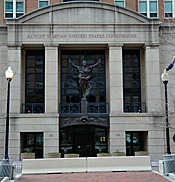 Virginia-based Taipan Enterprises Ltd. pleaded guilty to, and paid a $15,000 fine for, charges that it illegally engaged in arms-brokering without registering with, and obtaining licenses from, the Directorate of Defense Trade Controls (“DDTC”). The
  As enterprises began to confront the issues raised by cloud computing,
  We
We 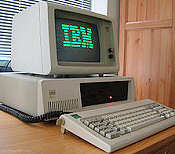 For reasons known only to the IT folks at the Directorate of Defense Trade Controls (“DDTC”), the agency’s electronic export licensing system (D-Trade) adopted the quirky, non-standard PureEdge Viewer as the software required to fill out and digitally sign export license applications forms rather than the industry standard (and widely installed) Adobe Acrobat. It’s probably safe to assume that no one had ever heard of PureEdge before it became a mandatory part of D-Trade.