
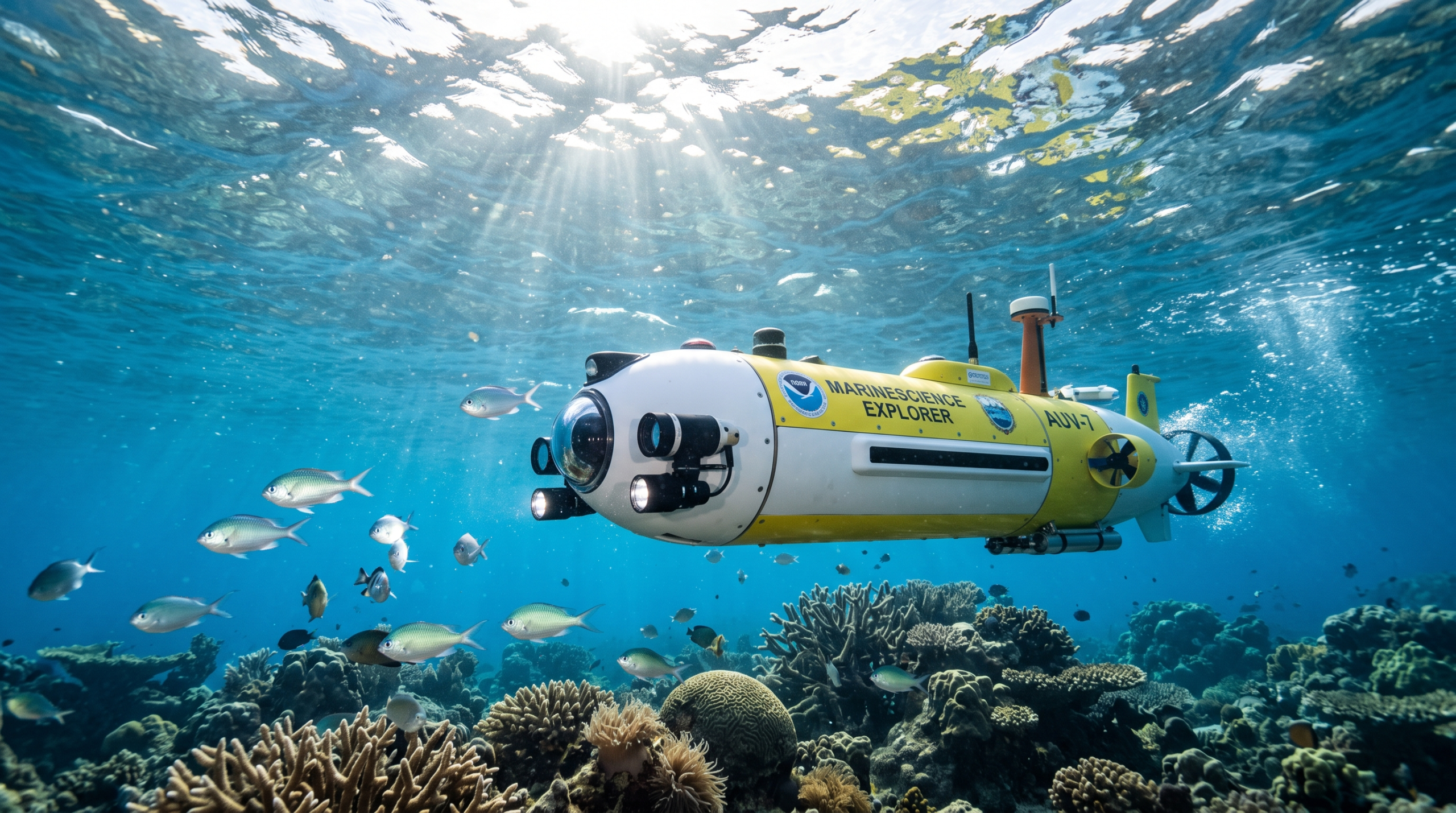
Pursuant to its periodic review of items that may no longer merit control under the International Traffic in Arms Regulations, the Directorate of Defense Trade Controls today issued an interim final rule on underwater drones or, in geek-speak, uncrewed underwater vehicles or UUVs for acronym lovers. This will not mean that you can rush out and start sending UUVs to your uncle in Uzbekistan. (Sorry about the u-lliteration; I couldn’t resist.) The new rules will just transfer some UUVs from the ITAR to the Export Administration Regulations where they will still be subject to export controls, albeit less stringent ones.
The key parameters in the ITAR for control are weight, length of time and distance of operation. Under the old rule, a UUV was captured by Category XX if it weighed more than 3,000 pounds and could operate without human interaction for more than 24 hours or more than 70 nautical miles. There is a significant exemption in section 126.9(u) (another U!!) for UUVs that are under 8,000 pounds and that are temporarily exported to foreign persons for scientific research, natural resource exploration, infrastructure maintenance or search and rescue operations. The exemption also permits furnishing assistance to a foreign person in the maintenance, repair, operation or use of those UUVs.
Under the new rule, UUVs over 8,000 pounds remain controlled under the endurance/range test, while those between 3,000 and 8,000 pounds now have to satisfy the additional navigation-capability test. Those UUVs are captured in Category XX if and only if they
Have capabilities for deviating from, determining, or planning a navigation route, other than: activating and following pre-planned routes using fixed waypoints, station-keeping, or performing collision avoidance maneuvers that adhere to the see-and-avoid principles of navigation regulations.
UUVs removed from the ITAR may fall under ECCN 8A001.c.1 if they meet the parameters in that ECCN even if they do not meet the weight, distance or time requirements of Category XX. One parameter for classification as 8A001.c.1 is that the UUV is
Designed for deciding a course relative to any geographical reference without real-time human assistance;
The difference, if any, between this navigational capability condition and the previously mentioned navigational capability condition in Category XX for UUVs is not clear at all. One possibility (but by no means a certainty) is that the new one in the ITAR contemplates a UUV that can be given mission objectives that have nothing to do with a particular geographic destination; whereas the condition in the EAR simply allows autonomy in planning the route, a basic capability of any modern navigation system. It might be the difference between telling the Waymo to go to Café Flaubert using what it determines to be the best route versus telling the Waymo to go find a restaurant that serves French food and has seating available. Perhaps recognizing that the line is less than crystal clear, DDTC specifically requests comments on whether “other navigation capabilities” should be considered to refine the new Category XX(a)(10) criteria.
ECCN 8A001.c.1 is controlled for NS2, but there are a large number of countries that do not have an X in NS Column 2 of the Commerce Country Chart and therefore do not require a license for NS2 reasons. (But NOT Uzbekistan!).
Everyone’s favorite License Exception STA is available but, for NS2 purposes, appears to be useful for only one A:5 country. None of the other A:5 countries is subject to the NS2 license requirement in the first place. The exception is the UAE, which BIS added to A:5 in July 2026 but which remains subject to NS2 licensing requirements. STA therefore could be used to send an otherwise eligible 8A001.c.1 UUV to the UAE without a license, subject, of course, to the other requirements and limitations of STA and the EAR.
There is, of course, a catch. STA for the UAE is available only when the ultimate consignee and all end users are approved for STA in Supplement No. 8 to Part 740. Those approved recipients include a handful of U.S. technology companies and their UAE subsidiaries, which presumably aren’t in the market for many underwater drones. Supplement No. 8 also authorizes UAE government agencies, expressly including the Ministry of Defense and Armed Forces, to receive otherwise eligible items under STA. The UAE is itself active in UUV development and production. UAE-based Arzanah Limited, for example, advertises both a 3-meter reconnaissance and surveillance UUV and an 11-meter unmanned underwater combat vehicle.