Oct
1
Can Locke Unlock the Grip of U.S. Export Controls?
 Posted by Clif Burns at 8:33 pm on October 1, 2009
 Category: BIS • Wassenaar
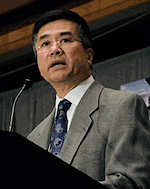 At today’s Update Conference in Washington, D.C., Commerce Secretary Gary Locke announced a sweeping vision for reform of U.S. export laws:
First, we should consider eliminating certain dual-use export license requirements for allies and partner nations — consistent with statutory and international obligations.
Of course, the rub here is what is meant by “consistent with . . . international obligations”? Obviously, this is a reference to the Wassenaar Arrangement, under which the United States has agreed to impose export controls on items on the “Lists of Dual-Use Goods and Technologies” made a part of that arrangement. But, as made clear in the 2006 “Best Practices Guidelines for the Licensing of Items on the Basic List and Sensitive List of Dual-Use Goods and Technologies,” members of the Arrangement are free to establish general licenses or license exceptions which permit the unlimited export of specified goods on the lists to specified destinations. The Guidelines, however, state that the member state should still require companies exporting under those general licenses or license exceptions to keep sufficient records of these exports to permit verification that any terms and conditions of the general licenses or license exceptions have been complied with.
Second, I’ve asked BIS to explore implementing a fast-track process for the review of dual-use export licenses for other key countries that do not pose a significant threat and have a strong history of export control compliance.
This is a laudable goal in theory that may be difficult to achieve in practice. Often the imposition of tighter deadlines for licensing decisions results in more applications being returned without action for minor errors — errors that would previously have been ignored — just so that the licensing officer can stay within the required time frame. That certainly seems to have been the result of the shortened processing guidelines for commodity jurisdiction requests filed with the Directorate of Defense Trade Controls.
And, of course we will continue to scour the Export Administration Regulations and de-list those items and technologies that no longer pose a threat to national security.
Here the Wassenaar Arrangement may prove to be somewhat more of an obstacle. Under the Arrangement, the United States is obligated to control the export of items on the Wassenaar Lists and the overwhelming number of commodities on the Commerce Control List (“CCL”) are also on the Wassenaar Lists. The United States can only really remove those common items from the CCL if it convinces other Wassenaar members to remove the same items from the Wassenaar lists at one of the plenary sessions held under the Arrangement.
Of course, there are all those items in Category 0 of the CCL that aren’t on the Wassenaar Lists, so we can look forward, perhaps, to the immediate removal of “horses by sea” (ECCN 0A980) and “plastic handcuffs” (ECCN 0A982), otherwise known as plastic cable ties, from the CCL.
 Permalink
Copyright © 2009 Clif Burns. All Rights Reserved.
(No republication, syndication or use permitted without my consent.)
10 Comments:

That’s a gem, Clif. I hadn’t caught that they still control horses 🙂
My impression is that, should the US wish to decontrol more technologies, most of the other Participating States of Wassenaar would be more than willing to agree.

Surely the US should consider the examples set by other Wassenaar states sure a Open General export licences which the UK run. The dual-use c ontrols are still adhere to but the goods are still licenced (with the exception of ‘0’ of course!)And non compliant companies are still prosecuted.

@CG: Wassenaar also provides for Global License where a named exporter may export unlimited quantities of specified items to specified destinations. That would also be a reform option, and it could be a useful addition to adopting a general license for exports of all dual-use items to, say, the EU, Canada, Australia, and New Zealand would probably involve less exporter paperwork.

I will file an action for declaratory judgment if they remove export of horses by sea without going through notice and comment. If they want to transfer it to the Customs to administer along with the CBP export licensing program for automobiles, that might work, but the export of horses by sea is one of the cruelist and most file practices ever conceived by man, and its done only to feed foreign barbarians’ taste for horse meat. We’ve ended horse slaughter in the United States: Its no time to facilitate it elsewhere. Most horses exported for slaughter are stolen and most of the horse meat that used to be exported came from stolen horses sold at auctions to “meat men”(just like most used automobiles that used to be exported were stolen). Forget about civil penalties: Meat men who export horses for slaughter need to be be strung up with a long rope on a short tree.

Risky as it seems to relinquish the control over the export of horses (by sea, including Canada!), it may be time to do so.
It may be that the Commerce Secretary wants to reform the export controls but realistically what chance does he have? would there not be significant resistance from within the various departments that currently administer the (f)laws.
If it is to have any chance of success it would need to be ONE department with a CLEAR set of rules that are REALISTIC and based squarely in 2009 and not previous decades or centuries. Then, and only then, would it a credible force with international support and a ‘just’ bite. from bully to best friend; USBEAR
(Unites States Bureau of Export and Asset Regulation) I can see the Logo now!
Aaaaah! I haven’t lost my ability to daydream…Weekend
@Hillbilly: But why should Canadians be free to eat horse meat with impunity?

HillBilly-“Meat men who export horses for slaughter need to be be strung up with a long rope on a short tree.”
I don’t think that would have the desired effect…

It would be more then reasonable to take the subset of countries who belong to all of the export licensing regimes (Wassenaar, Australia Group, Nuclear Suppliers, Missile Technology Control Regime) and simply declare this – essentially the US and NATO +4 – a license free zone. You could even take GBS and broaden its applicability in ECCNs, including non-NS reasons for control, and add a reporting / audit requirement. The fly in the ointment, however, remains DoD. (Remember the ICT fiasco?) But does this administration really have the courage to (un)Locke the Gates?
@Mark: That is an interesting idea, but you run into some pretty tough issues there. For instance, would you want there to be license-free trade in military and dual-use technology between the US and Russia, both members of all the multilateral export control arrangements? Or the US and China?
The biggest problem to creating such a zone is that these arrangements are set up to ensure that the participating states have adequate controls on their military/dual-use technology. The arrangements are not set up because participating states all have common outlooks on who should receive controlled technology. For Wassenaar in particular, a main goal is to make sure that, if a country exports a dual-use/military technology, it is a conscious (political) decision of the state, rather than purely market-driven.

I couldn’t agree more that our export system needs reform but I’ll remain skeptical. Not only have I heard this before but the obstacles to accomplish any kind of meaningful, sustainable reform are a multitude and have as many variables.
As mentioned in the comments here and elsewhere one agency to control exports has been proposed. While a logical place to effect meaningful change the obstacles to it are close to herculean. Asking the licensing and reviewing agencies to give up turf would make that for control over satellites look like a sandbox kerfuffle. They can’t even agree on who controls what item.
I sound very pessimistic but I hope I’m proved wrong.
By the way – here here – to Hillbilly’s comment.