May
13
Is There A Secret United States Munitions List?
 Posted by Clif Burns at 5:54 pm on May 13, 2008
 Category: Criminal Penalties • DDTC
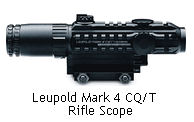 A magistrate hearing pretrial motions in the criminal export case against Doli Syarief Pulungan wondered in a recently issued Report and Recommendation1 whether there might be a secret version of the USML which lists actual items rather than categories of items. Of course it’s impossible for me to say whether or not there is a “secret” list of that sort with any certainty, since if I knew about it, it wouldn’t be so secret. I don’t think such a list exists, however, but I do think its useful to see what caused the magistrate to wonder about such a list.
As we reported in an earlier post, Pulungan is charged with conspiring to export 100 Leupold Mark 4 CQ/T Rifle Scopes to Indonesia without a license. One of Pulungan’s pretrial motions was for a bill of particulars describing “the specifications to which the subject riflescopes were manufactured that make them defense articles on the Munitions List.” According to the magistrate’s report:
The government’s initial response is that its expert will testify at trial that Leupold Mark 4 CQ/T Riflescopes are on the Munitions List. Pulungan rejoins with an obvious observation: the list itself does not specify any brand or model of riflescope, nor does it list the specifications that would make the scopes defense articles; so what relevant testimony could this ostensible expert possibly provide? Pulungan wants a breakout of the implied syllogism: a riflescope that possesses characteristics x, y and z is deemed to be manufactured to military specifications; a Leupold Mark 4 CQ/T Riflescope possesses characteristics x, y and z; therefore, a Leupold Mark 4 CQ/T Riflescope is manufactured to military specifications. What, asks Pulungan, are x, y and z?
Of course the answer to that question is hardly a deep, dark secret. Leupold’s web site reveals that the scope was designed for the M16. Rather than saying this, however, the prosecution tried to be cute, and that’s where the trouble begins. The magistrate continues:
The government responds that it doesn’t work this way. There is no x, y or z factor that lands a riflescope on the Munitions List in Category I(f). The only logical way to interpret the government’s response is that there is another list, prepared by the DDTC, which determines whether any particular item is a defense article included on the Munitions List as part of ITAR.
The magistrate goes on to note that the government in its pleading says that an item “is designated as a ‘defense article’ on the United States Munitions List” or “defined by the ITAR as a ‘defense article’ covered by Category I(f)”:
If I am interpreting Count 1’s passive-voice declaration and the government’s explanation correctly, then some person or committee within the DDTC has declared that the Leupold Mark 4 CQ/T Riflescope is a “defense article” because it fits within Category I(f) of the Munitions list. But this doesn’t answer Pulungan’s actual complaint: how did it get there? Where, precisely, might a potential exporter actually find this ITAR designation of the Leupold Mark 4 CQ/T Riflescope? What is the foundational basis for the testimony of the government’s trial witness from the DDTC? Does the DDTC have some other real list by make and model? Is there a memo specific to the Leupold scope’s I(f) designation? If so, where is it and why hasn’t it been provided to Pulungan as pretrial discovery?
Following this logic to its end, the Magistrate ordered the prosecution to provide the who, how and why of the designation:
[T]he government promptly must explain in detail who designated the Leupold Mark 4 CQ/T Riflescope a “defense article,” how they did it (the procedural mechanisms) and why they did it (the actual and specific reasons for the designation).
To which we can anticipate the government will respond: nobody designated the Mark 4, there was no procedure that designated it, and no specific reasons were given. The scope is a USML item because it was manufactured to be used on the M16.
You can easily see how the government’s loose language got it into this silly predicament. Items aren’t on the USML; just categories are on the USML and items are either in a USML category or not. The Mark 4 scope isn’t designated on the USML. “Riflescopes manufactured to military specifications” are designated category I(f) on the USML and the Mark 4 either is or isn’t a “riflescope manufactured to military specifications.”
And the issue before the court is not the designation of milspec rifle scopes as category I(f), a designation which is not reviewable under section 38(h) of the Arms Export Control Act, 22 U.S.C. § 2778(h), but simply whether the Mark 4 is or is not a “riflescope manufactured to military specifications.”
It is only a semantic distinction to note that the category not the scope itself is on the USML, but failing to observe that distinction clearly resulted in the magistrate issuing an order that he might not have otherwise issued.
1 Westlaw subscription required.
 Permalink
Copyright © 2008 Clif Burns. All Rights Reserved.
(No republication, syndication or use permitted without my consent.)
6 Comments:

Poor Mr. Pulungan was convicted on May 6th of conspiracy to violate the AECA, but acquited of the charge of lying to the FBI. The court records in PACER show that the government response to the Court’s order was a discovery letter in which the prosecutor advised that the manufacturer had received a commodity jurisdiction determination from DDTC in 2003 for a similar but not identical scope (i.e., different part number), and then provided a pre-trial certification from DDTC that the scopes that the defendanted wanted were defense articles. The government then filed a motion en limine to prohibit the defense from attempting to introduce evidence challenging the classification, which the court granted in its final pre-trial order. Given that rifle scopes are also on the CCL (ECCN 0A987 “Optical sighting devices for firearms”), this order precluded the defense from making a fact-based defense challenging State’s assertion of jurisdiction, thus usurping a function of the jury.
A pattern revealing the Dept. of Justice strategy in criminal prosecutions of export control violations is now clear from this and other cases (such as the ongoing trial in US v. Alavi in Phoenix and the US v. Sherman plea agreement in Knoxville): Justice waits until the last minute to present a pretrial certification of classification and then asserts that the government’s post-complaint determination of classification is a political question (rather than a question of fact and law) not subject to question by either court or jury. In AECA cases, Justice also misrepresents to the court that AECA Sec. 2778(h) (“The designation by the President … in regulations issued under this section, of items as defense articles or defense services for purposes of this section shall not be subject to judicial review”) precludes the court from determining whether a particular thing is actually among the class of things described by a USML Category;when, as Clif correctly notes, specific items are not on the USML merely generic categories. Sec. 2778(h) by its terms precludes judicial review of the rulemaking function of promulgating generic categories on the USML, not the adjudication of whether a particular thing is actually described by the USML.
Unfortunately, many trial courts are buying the government’s assertion of political question andor at least Justice’s Sec. 2778(h) deception. Unfortunately, a couple of Circuits have also bought it (the 9th in Mandel and Spawr, the 3rd in Zhang).
Of course, classification determinations is one of the most frequent things that the Court of International Trade does and the methodology of classification under the HTS is not conceptually different from classifying products under either the USML or the CCL. The Supremes have held in US v. Mead that Customs’ classification determinations are not entitled to deference. There is no reason why DDTC or BIS classification determinations as to particular products should be immune from review. History shows that where administrative agencies are immune from judicial review they become abusive or at least sloppy. The GAO has found that there is considerable inconsistency in jurisdiction and classification determinations, which has led to an uneven playing field, with some companies getting more favorable determinations for competing products. Its about time jurisdiction and classification determinations were made public (as proposed in HR5916 now before the House), and subject to judicial review.

My first impression is that the prosecutor either isn’t an ITAR expert, or is worried about proving his case. I’m guessing it’s the first one (and he’s in the same boat with the magistrate), but let’s say the scope actually is identical to one initially designed for a rifle subject to the EAR, and absolutely no changes were made for its use on the M-16 (contrary to the website info). Or, its initial design was military, but then the manufacturer previously sought and obtained a Commodity Jurisdiction Request that resulted in the item being subject to the EAR. (doubtful) As we all know, dual use items are subject to the EAR, not the ITAR, regardless of end use. (Well, China is another messy story. . .) Whenever the ITAR’s Munition List says something like “and parts, accessories, yada yada yada, for use on the items in categories xxa, xxb, etc.”, you have a military item if you designed the accessory for xxa, xxb, etc. If that’s what the expert is there to show, then I don’t see a problem with his (or her) testimony. Why the prosecutor didn’t simply state the expert witness would tie the website information to the criteria for making an item subject to the ITAR is beyond me. (Ie., just because the website says it was designed for the M-16, although arguably an admission, doesn’t make it so, and also doesn’t mean a CJ wasn’t obtained.)

That the prosecutors didn’t use the citation in 120.3 which gives the policy on designating a defense article is equally as telling. I’ve heard many an argument made that being made to a military specification is not the only criteria to use when designating a defense article.

Just an FYI, Leupold put a small icon on the lower right side of the scope image, “DUAL USE” – Hunting Shooting Tactical. Wonder what prompted that??? Hmmmm…
http://www.leupold.com/tactical/products/scopes/mark-4-cqt-riflescopes/
These recent cases are also monuments to the weakness of any defense team that does not include export compliance subject matter experts to at least advise the trial counsel. The Dept. of Justice normally opposes any attempt by the defense to put on expert witnesses about classification and licensing, thus purposefully keeping the court, both judge and jury, ignorant and blind about how export compliance is handled in the real world so they can build up their body count.

Leupold’s CJ was not completed until 2007. As a person with experience working for a riflescope manufacturer I can attest to the fact that no one seems to know what “military specifications” are to DDTC and BIS (I asked both of them) but they certainly know when they see it.