Feb
19
There’s No Place Like Home
 Posted by Clif Burns at 5:57 pm on February 19, 2008
 Category: Criminal Penalties • General
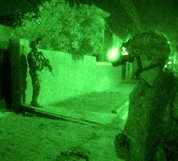 According to this article in the South Florida Sun-Sentinel, an Iranian woman and mother of two has voluntarily left Iran to face charges in South Florida that she attempted to export illegal 3,000 helmet-mounted night vision systems from the United States to the Iranian military. This is a somewhat surprising decision given that the United States and Iran understandably don’t have extradition treaties with each other.
The woman, Shahrazad Mir Gholikhan, was arrested in Vienna, Austria in 2004 when she and her ex-husband, Mahmoud Seif, traveled to Vienna Austria to pick up one night vision system that had been exported from the United States to Austria and that they planned to re-export to the Iranian military. She was convicted of violating Austrian export laws and sentenced to 50 days in prison. A grand jury in Florida thereafter indicted her on charges of money laundering and export violations.
At a bond hearing in Fort Lauderdale last Friday, Gholikan’s attorney David Markus explained Gholikhan’s remarkable decision on the basis that “she believes in her innocence.” But the defenses so far proffered by her attorney aren’t very convincing on their face:
Markus claims prosecutors have Gholikhan confused with another woman and his client at most acted as a translator. He is pushing to have the case thrown out, arguing Gholikhan’s 2005 conviction on similar charges in Austria makes the U.S. prosecution a violation of double jeopardy protections.
Saying that it wasn’t her but if it was she was only a translator is rather like arguing that your client wasn’t involved in the bank robbery but if he was he only drove the get-away car.
And the double jeopardy claim is equally fanciful. The Supreme Court stated in United States v. Wheeler, 435 U.S. 313 (1978) that prosecutions
brought by separate sovereigns, they are not “for the same offence,” and the Double Jeopardy Clause thus does not bar one when the other has occurred.
So, it won’t be long before Ms. Gholikan may be tapping her heels together and chanting “There’s no place like home.” That may have gotten Dorothy back to Kansas but it’s doubtful whether it will get Ms. Gholikhan back to her home in Tehran.
 Permalink
Copyright © 2008 Clif Burns. All Rights Reserved.
(No republication, syndication or use permitted without my consent.)
5 Comments:

I’m not sure that the case law cited actually refers to separate sovereigns in the same sense as this issue: it talks of federal/state, or federal/indian sovereignty, and even the Fifth Amendment appears to be talking about federal/state issues. Going further, the Philipines case cited in the example above was unique in that it seems to be a court martial empowered by US law, and so is not a straight issue of two separate sovereigns. This Austrian/Iran/US case might boil down to where the jurisdiction for the offence is properly deemed to have been, but even then this Iranian national may dispute that the jurisdiction of the US to make a jurisdiction decision is doubtful. In which case the US might just lock her up on the grounds of that old axiom ‘possession being 9 tenths of the law’!

Most coon hunters in Tennessee have night vision goggles (a few purists like Al Gore won’t use ’em). You can buy the best RUSSIAN night vision goggles at any gun show in the South, and many coon and coyote hunters do. Who is the Bush government fooling by these controls? Themselves, most likely.

Iran is controlled for terrorism. There are many “off the shelf” items that cannot be exported to AT countries. By plain language in the EAR, you are not allowed to export lifejackets to them. So technically, if you find a Cuban adrift outside US territorial waters and you throw them a lifejacket you need a license to export that lifejacket. Tip-throw them a life ring.
The tricky part is what constitutes “USE” for an Iranian in the U.S. Are airlines violating “deemed” export laws when they demonstrate how to use the lifejacket under your seat? I suspect this is public domain information but you never know.
AT controls extend to masks, fins, wetsuits, weight belts, then new car GPS systems, etc.

If you look closely at the post, you’ll see that these were military helmet-mounted night vision goggles. These are not the ones being used by most hunters in any state, but are instead those being used by our soldiers on the ground in Iraq. These military-grade night vision goggles are controlled for the safety and advantage of our warfighters.

MO – You’re right. Additionally she is alleged to have been planning to sell the night vision to the Iranian military, which further aggravates the matter.